

Quick answer
In the first week of Invisalign expect firm tightness with each new aligner (it fades in a day or two), a slight lisp that disappears within days as your tongue adapts, and more saliva at first. The non-negotiable: 20 to 22 hours of wear a day, which means aligners come out only for meals and cleaning, and go straight back in. Practical habits that decide the result: a case in your pocket (napkins at cafes are where aligners go to die), brushing before reinsertion, and water only while they're in.
Day by day, honestly
Days 1 and 2: the aligners feel intrusively present, teeth are tight, and you'll talk with a faint lisp on S sounds. All three are normal. Days 3 to 5: the tongue adapts, speech returns, the tightness fades to background. By day 7: most patients report forgetting the aligners are in, which is precisely the danger: comfort is when wear-time discipline slips.
The 22-hour truth
Aligners only move teeth while worn. The maths is unforgiving: three meals plus cleaning already spends the two-hour budget, so aligners out equals treatment paused. "I'll put them back in after this meeting" is how a 12-month plan becomes an 18-month plan. Out for eating, straight back in after, every time.
Habits that save the result
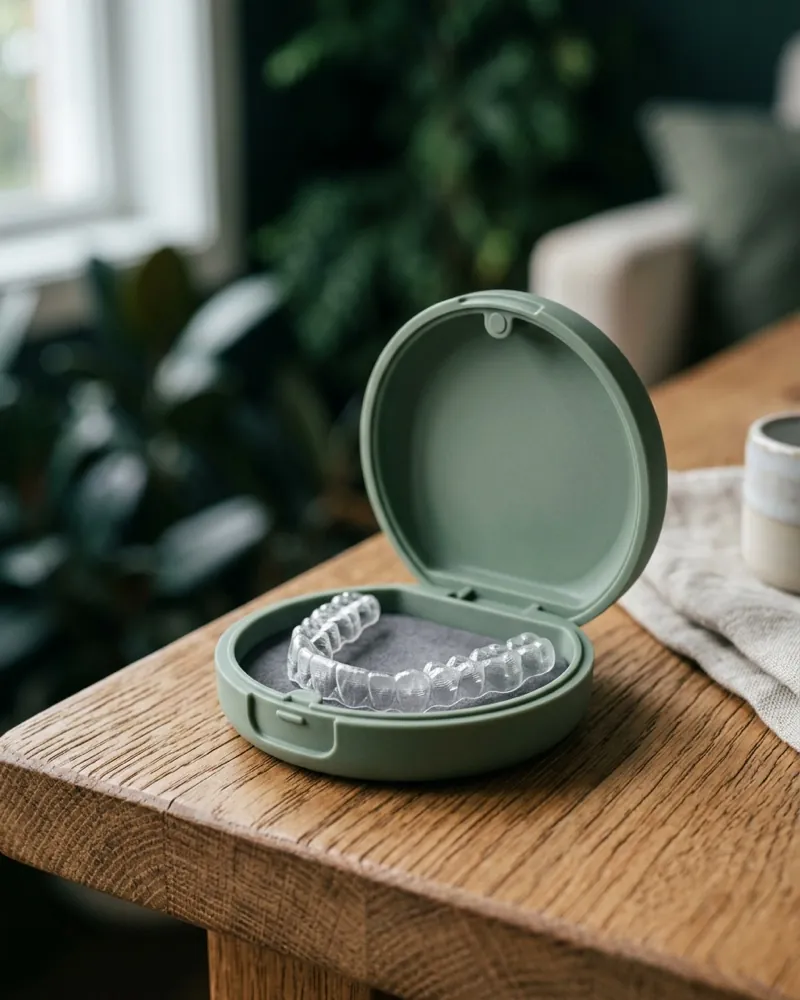
- The case travels with you. An aligner wrapped in a serviette gets thrown out; it's the single most common way aligners are lost.
- Brush before reinsertion, or at minimum rinse thoroughly; plastic over lunch is a decay incubator.
- Water only while in. Coffee stains them amber; sugar pools beneath them.
- Chewies (small foam cylinders we supply): a minute of biting seats each new aligner fully. Aligners that aren't fully seated aren't working.
- Change aligners at night, so the tightest hours happen while you sleep.
About the attachments
Most plans include small tooth-coloured bumps bonded to certain teeth; they give the aligner grip for particular movements. They feel prominent for a day and invisible thereafter, and they polish off completely at the end of treatment.